GalaTayo guide
Historical Places in Metro Manila
Heritage and historical sites in Metro Manila, best paired with a walking route and a merienda stop.
Quick answer
- Best for
- Dates, photo walks and family days
- Budget
- Free to ₱75 per head, starting prices before transport
- Metro Manila
- 13 places
- Free to ₱75 per head
- Updated October 2026
Top 10 Historical Places in Metro Manila
- 1
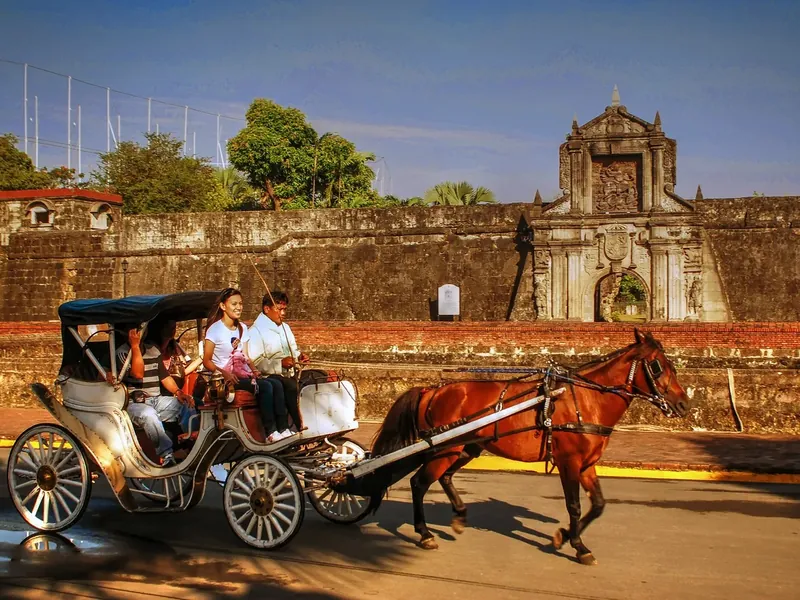
Walls, dungeons, river views and Rizal's last days: Fort Santiago is where Manila's history gets real! The Spanish-era fort guards the mouth of the Pasig River at the northern tip of Intramuros. Walk the Baluarte de Santa Barbara for river views, see the dungeons where prisoners were held during World War II, and visit the Rizal Shrine, where the national hero was imprisoned before his execution. It's a National Cultural Treasure. Go early in the morning or late afternoon to beat the heat.
- 2
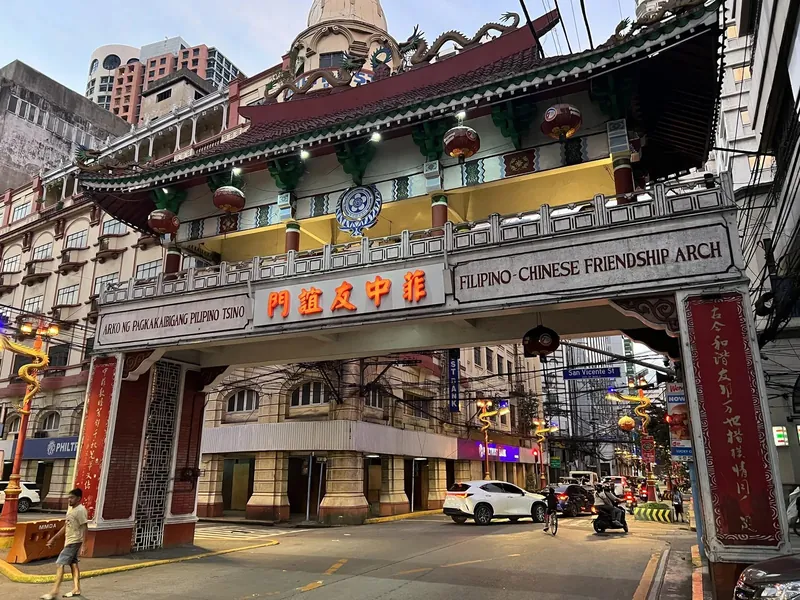
Time for a food crawl in one of the oldest Chinatowns in the world! Binondo was founded in 1594 for Chinese settlers across the river from Intramuros, and today it's Manila's busiest food-and-trade district. Start at Binondo Church, the Minor Basilica of San Lorenzo Ruiz with its octagonal bell tower, then walk Ongpin Street for dumplings, hopia and lumpia from old family shops. Pick four or five stops instead of queueing everywhere, and slow down between bites to see the old streets and Escolta nearby. Best moment: a weekday morning, before the lunch crowd, with an empty stomach and small bills ready.
- 3
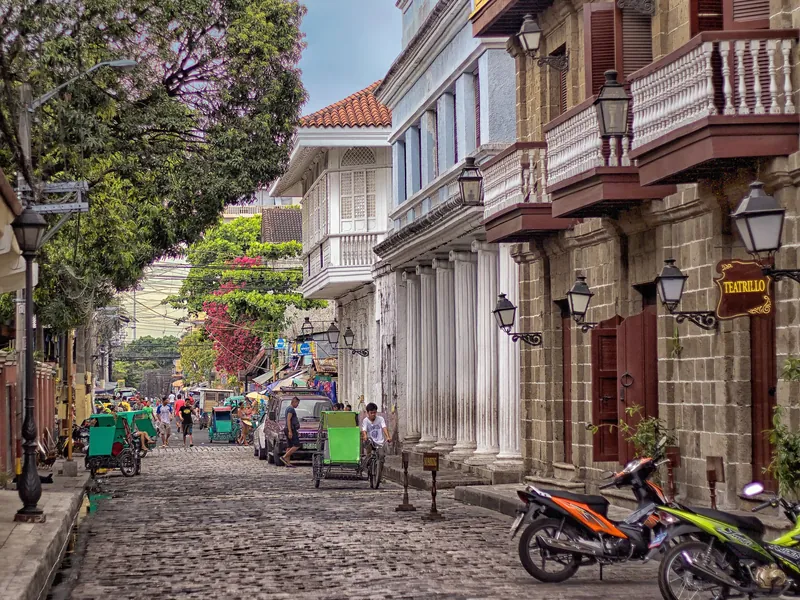
A whole walled city, not just one tourist spot! Intramuros was the heart of Spanish Manila, ringed by thick stone walls and bastions. World War II flattened much of it, but San Agustin Church, a UNESCO World Heritage Site, still stands, and much of the walled city has been rebuilt. Walk the cobblestone streets, explore Fort Santiago and the Rizal Shrine, step inside Casa Manila and Manila Cathedral, and ride a bike or kalesa between the gates. Pick two or three anchors instead of rushing everything. Spend the morning in museums, then take a slow sunset walk on the walls.
- 4
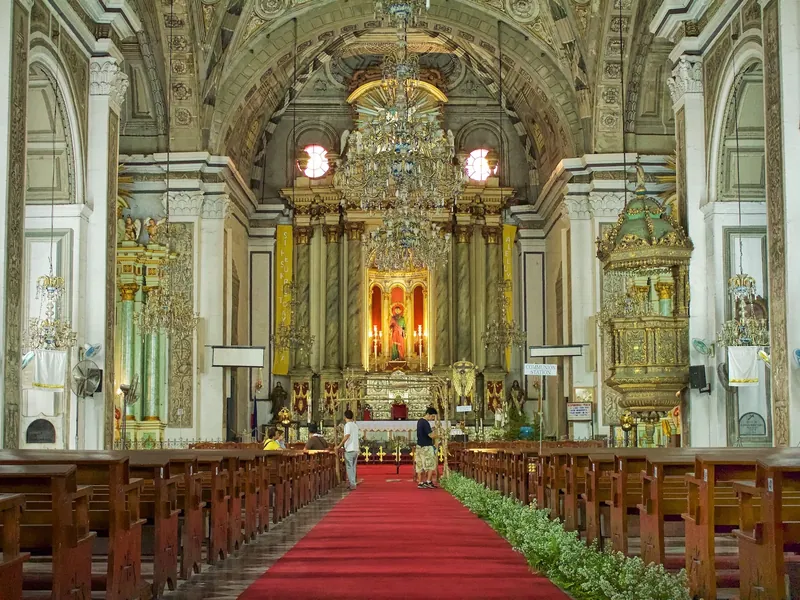
A must for every Intramuros walk! San Agustin Church is one of the four Baroque Churches of the Philippines on the UNESCO World Heritage List. Its plain facade hides a jaw-dropping interior: a trompe-l'oeil painted ceiling that looks 3D, carved choir seats, an ornate pulpit and grand Baroque altars. Next door, the San Agustin Museum and cloister hold religious art and old treasures. Come on a weekday morning, outside Mass and wedding schedules.
- 5
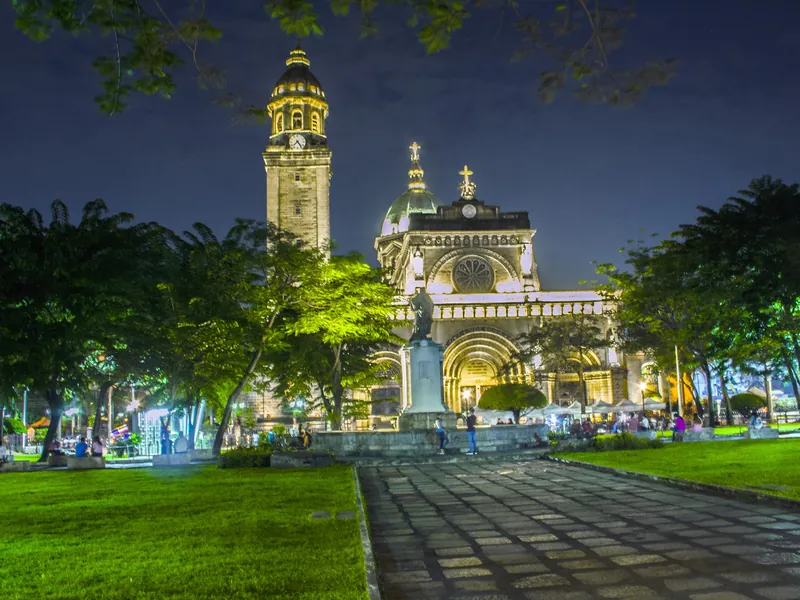
Destroyed and rebuilt again and again, Manila Cathedral is the comeback story of Intramuros! Facing Plaza Roma, the Minor Basilica and Metropolitan Cathedral of the Immaculate Conception has survived fires, earthquakes and war. Step inside for the glowing stained-glass windows and the massive pipe organ. It's an active church, so visit outside Mass and wedding times, dress modestly and keep it quiet. Late afternoon light makes the best facade photos; then walk to San Agustin Church and Fort Santiago nearby.
- 6
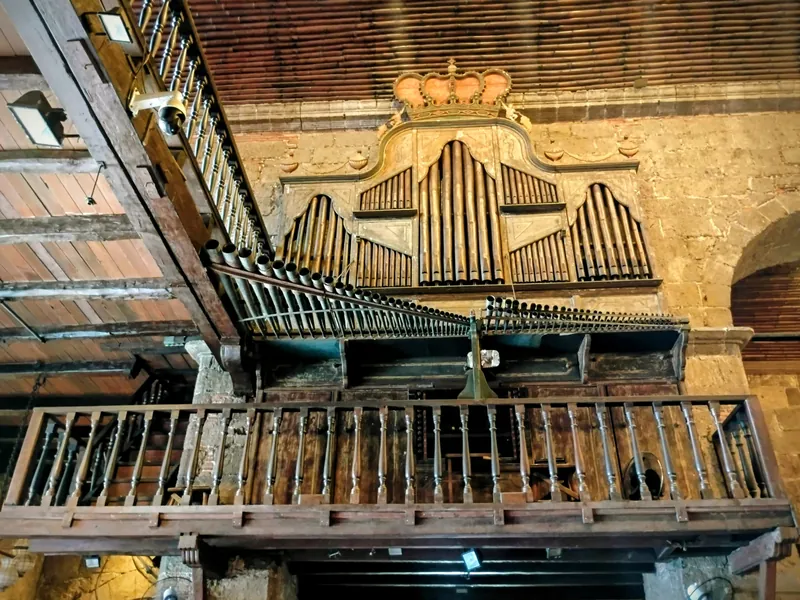
An organ made of bamboo, and it still plays after 200 years! St. Joseph Parish in Las Piñas is home to the world-famous Bamboo Organ, built from 1816 to 1824 by Fray Diego Cera, the town's first parish priest. Of its 1,031 pipes, 902 are made of bamboo. Step inside the stone church, visit the museum beside it and, if you can, hear it play during Mass or the International Bamboo Organ Festival every February. Come on a weekday morning for a quiet visit.
- 7
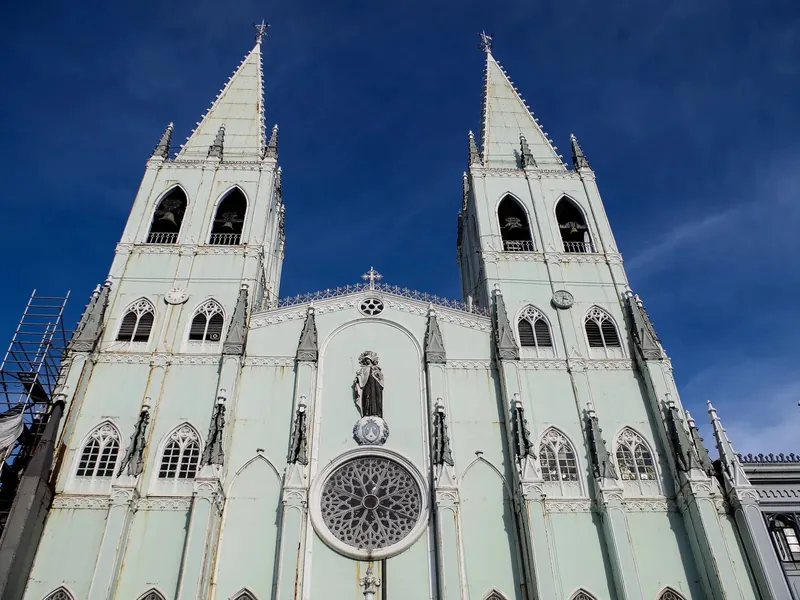
It looks like stone, but it's all steel! San Sebastian Basilica in Quiapo, completed in 1891, is the only all-steel church in the Philippines and the country's first minor basilica. Inside, the painted metal walls imitate marble and stone, light streams through stained glass, and tall pointed arches draw your eyes up. The Our Lady of Mount Carmel image sits above the main altar. Restoration work against rust continues, so check for scaffolding. Come on a weekday morning, outside Mass times.
- 8
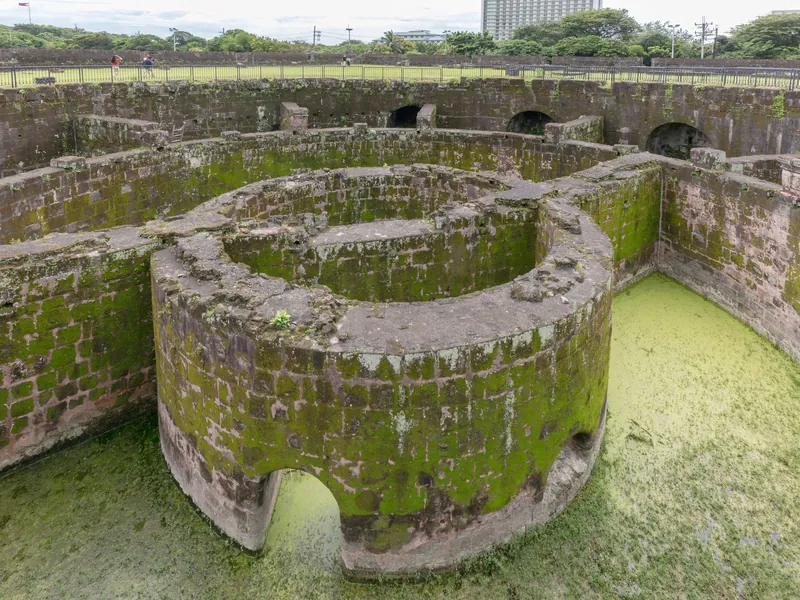
A 16th-century fort shaped like an ace of spades! Baluarte de San Diego started in 1586 to 1587 as the round Fort Nuestra Señora de Guia, designed by Jesuit priest Antonio Sedeño, and its circular stone remains still sit inside the later spade-shaped bastion. Buried under soil, the old fort survived the 1945 Battle of Manila, then was excavated in 1979 and restored by 1992. Today it is a peaceful garden with lawns, pergolas and old walls you can walk on, a quieter alternative to Fort Santiago. Go late afternoon for soft light and cooler air, and wear good shoes for the uneven stone.
- 9
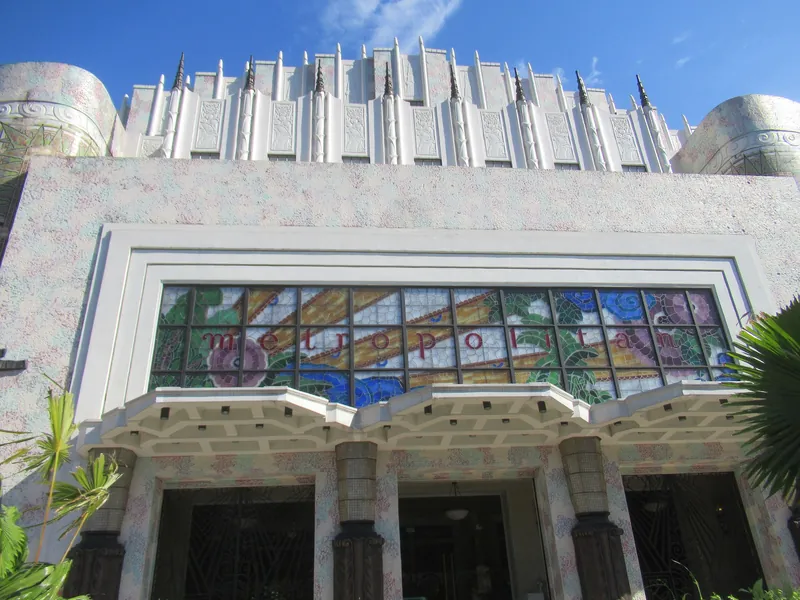
Manila's Art Deco queen is back, and she's gorgeous! The Metropolitan Theater, or MET, was designed by Juan Arellano and inaugurated in 1931, with tropical Filipino motifs in its reliefs and a stained-glass marquee. Partly destroyed in World War II and closed in 1996, it reopened in 2021 after a grand restoration. The best way to see the inside is to catch a show, concert or ballet: a fancy but affordable date idea. Even without a ticket, the facade by Liwasang Bonifacio is a great photo stop, especially in the late afternoon.
- 10
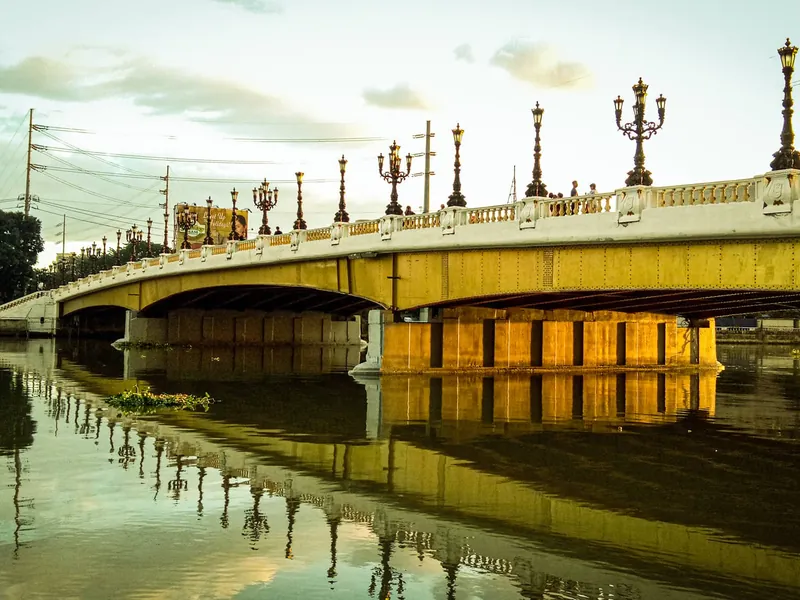
Manila's prettiest bridge, with Paris energy over the Pasig River! Restored to its old-world look with ornate lamp posts and graceful statues, Jones Bridge glows at blue hour, with views of the Manila Central Post Office, Binondo and the river all at once. It's a quick photo stop, not a hangout: snap your shots from the sidewalk, then walk on to Binondo for food or Escolta for old Manila buildings. Go at sunset, mind your bag and phone, and stay on the sidewalk.
Good to know
What are the top picks for Historical Places in Metro Manila?
Fort Santiago, Binondo Chinatown and Intramuros lead this guide. All 13 places are ranked on this page, best first.
How much should I budget?
Starting budgets for the top picks run Free to ₱75 per head. Each place page breaks down what the money covers.
How are the places in this guide picked?
Only the best places make the list. Each one is scored on real evidence, like editorial lists, Philippine travel apps, Reddit threads, review volume and Michelin, plus how well it fits a day out. Plain eateries, chains and ordinary malls are left out, and the rest are ranked best first.
Can I plan a whole day from this guide?
Yes. Save the places you like, then start a plan: pick a date, invite friends with one link and split the budget in the app.